PORT-AU-PRINCE |

Haiti called off its presidential election on Friday, two days before it was due, over concerns of escalating violence sparked by the opposition candidate's refusal to take part in a process he said was riddled with fraud.
Pierre Louis Opont, president of Haiti's electoral council, said the runoff vote was being pushed back for security reasons. But he did not say when the election, already postponed twice before, would be rescheduled.
The announcement led to jubilation from demonstrators marching to oppose the election. They danced on the streets of the capital Port-au-Prince, but the mood quickly darkened. Gunshots were fired as protesters clashed with police.
The postponement is nevertheless expected to ease unrest after days of protests in the deeply impoverished country of about 10 million people, at pains to rebuild from a devastating earthquake six years ago and to emerge from decades of political dysfunction.
Several western nations, fearing a new era of instability in the Caribbean nation, have been assisting Haiti in its election preparations. The U.S. government alone has chipped in $30 million.
But opposition candidate Jude Celestin said last week he would not take part in the election, alleging a first round vote in October was rigged to favor the ruling party candidate.
"The fact that the electoral council was forced to give up the electoral farce is a victory for the Haitian people," said Jean-Charles Moise, another opposition candidate who said fraud led to his first-round defeat.
Hamstrung with weak institutions, Haiti has struggled to build a stable democracy since the overthrow of the 1957-1986 dictatorship of the Duvalier family and ensuing military coups and election fraud.
GOVERNMENT CONVENES ON SECURITY
The government held an unscheduled cabinet meeting to plan measures to "guarantee public order and the security of lives and property," the prime minister's office said in statement without giving details.
In a statement explaining the postponement, the election commission reported that seven election offices and an official's home had been torched and several other offices were attacked, including by armed men.
On Friday, thousands marched in the capital for the third time this week. Police fired at a group attacking a man who appeared to have shot at them. The man lay bleeding profusely, but it was unclear how he was injured.
Protesters set fire to at least one car. Burning tires billowed black smoke directly below a giant poster of ruling party candidate Jovenel Moise. A man stabbed another poster of Moise with a metal pole.
"The direction (outgoing President Michel) Martelly has taken the country is no good," said Rolando Joilcoeui, a community worker standing among the crowds.
"We've said 'no' to that regime. The election was a fraud."
Swiss-trained engineer Celestin said the government has not remedied cheating in the first round, and called the plans for the second round vote "a farce."
Celestin was second in a field of 54 candidates in the October election. He came in almost eight percentage points behind Moise, a banana-exporter and political newcomer running on a platform to modernize agriculture and water management in the flood and drought-prone nation.
Moise told Reuters earlier on Friday the vote represented "the will of the people" even if he was the only candidate fully participating.
After the postponement, members of Moise's campaign team sat grim-faced at a city hotel. Asked what happens next, one said: "That's the million dollar question."
Haiti's newly appointed senators voted almost unanimously to postpone the vote earlier this week, and the Catholic church, business groups and local election observers warned an election under such conditions would not be credible.
'CLEAR TIMELINE'
In a statement from the United Nations, the "core group" of countries aiding Haiti that include Brazil, France and the United States among others, said they deplored the violence and reiterated "support for the conclusion of an inclusive and equitable electoral process."
U.S. Republican presidential candidate, Senator Marco Rubio from Florida, told Reuters Haiti must lay out "a clear timeline" for a democratic election.
Only about a quarter of Haiti's 5.8 million registered voters cast their ballots in the first round.
Local observers say a loophole meant thousands of booth watchers employed by parties were able to vote more than once. The Organization of American States also signaled the poll watchers as a major source of irregularities.
That anomaly has been largely fixed.
Formerly a singer known as Sweet Micky famous for performances on carnival floats, Martelly is constitutionally required to leave office by Feb. 7, when the annual celebration starts this year.
However, his five-year term only ends in May, leaving some flexibility, with proposals including a March election.
The opposition groups want an interim government set up on Feb. 7 to oversee a new election.
After months of upheaval that started with violence and ballot stuffing in an August vote for lawmakers, some Haitians see the delay as a recipe for more uncertainty.
"Everything has come to a standstill because of the elections," said out-of-work construction laborer Rodrigue Pierre, holding a hammer on the edge of a hillside cinder-block slum in Port-au-Prince.
"We just want a new president." |
Sunday, January 24, 2016
Haiti postpones Sunday's presidential election as violence erupts.

Wednesday, January 13, 2016
Earthquake Anniversary
Miami Herald By Jacqueline Charles
January 12, 2016

TITANYEN, Haiti
Haiti commemorated the sixth anniversary of its tragic Jan. 12, 2010 earthquake Tuesday with a low-key wreath laying ceremony at the barren mountaintop where many of its dead lay buried in mass graves.
President Michel Martelly, donning a white guayabera, and first lady Sophia Martelly arrived shortly after 10 a.m. at Parc Christophe on the outskirts of Port-au-Prince, site of an almost completed marble and iron memorial that pays homage to the estimated 300,000-plus dead.
After briefly reviewing a black and brown marble headstone bearing his name and the words, 12 January 2010 We Will Never Forget in Creole, Martelly joined Prime Minister Evans Paul. Each laid a wreath of white roses before a gigantic rock that has come to mark the site. This year, the rock was surrounded by long-stem white roses and white candles, several of which spelled out the date of the tragedy.
There was no podium speech from the president as in years past or foreign dignitaries. But as Martelly made his way out of the park, he told journalists that today was purposely chosen as “A Day of Reflection,” so that Haitians can remember that they had a responsibility in “the dimensions of what happened.”
“We amplified it because we didn’t construct well; we didn’t properly prepare ourselves, we didn’t really secure the people in respect to the construction codes so we could avoid this catastrophe,” he said. “Today, is an opportunity for us to say ‘We’re going to do better; we’re going to do better at all levels, not just in construction but in our attitude.’ ”
For months, Haiti has been embroiled in yet another paralyzing political crisis, this one triggered by its violence and fraud-marred Aug. 9 legislative first round elections and the Oct. 25 legislative runoff and presidential vote. Local observer groups and opposition candidates have alleged “massive fraud” and called for an inquiry into the balloting.
Opposition presidential candidate, Jude Célestin, who qualified for the second round against Martelly’s presidential pick, entrepreneur Jovenel Moïse, has said he will not participate in the Jan. 24 presidential runoff. He has called on the government to adopt both his conditions for running, as well as a host of recommendations by its electoral evaluations commission that said the vote was plagued by irregularities and fraud.
The former head of the Centre National d’Equipement (CNE), Célestin supervised the removal and burial of nearly 300,000 quake dead by his mostly female heavy equipment operators in three different sites at Parc Christophe. The site where the monument is located is the biggest of the burial sites.
Célestin was not at the commemoration but this year’s theme, which hung on a back drape, “We were there for one another,” served as a reminder of how Haitians were the first rescuers after the tragedy.
Though Martelly tried to shy away from addressing the electoral crisis that continues to overshadow life in Haiti, he called on Haitians to come together, while making a subtle reference to the crisis.
It’s time, Martelly said, for Haitians to “prioritize Haiti’s interests over personal interests. It’s not just a question of only winning power but it’s a question of what are you going to do, what plan do you have, is it Haiti that you see first?”
“Criticism is easy,” he noted, “but I am asking everyone to look at themselves, and to ask themselves what they can do to bring their stone to the reconstruction of the new Haiti.”
According to the International Organization for Migration, the number of Haitians displaced by the earthquake has dropped from 1.5 million to 59,720.
Lasting 35 seconds, the quake also injured 300,000. Its death toll - announced as 316,000 by the previous government - remains a matter of debate.
“Six years since the country was devastated by the earthquake of January 12; six years since we carried the pain of the sudden death of thousands of our compatriots of both sexes; six years since, we still do not know the exact number of our dead, nor all of their names,” the feminists organizations Kay Fanm and Solidarité des femmes haïtiennes (SOFA) said in a statement.
Calling the tragedy, which also killed a number of leading Haitian intellectuals and feminists, a “massacre,” the organizations said, “January 12 was not only the result of a natural disaster, but also the result of inconsistencies in matters of urban planning, construction type, environment.”
Tens of thousands of Haitians, they note, continue to live in deplorable, substandard housing. Less than a mile from the memorial site, for example, stands Canaan, a post-quake community with more than 300,000 residents that has come to symbolize the failure of the shortcomings of the reconstruction effort.
Of the $12.5 billion pledged by foreign donors to help Haiti rebuild, it remains unclear how much has been disbursed or obligated. At some point, donors stopped distinguishing between regular aid and earthquake aid, say those who previously tracked the funds.
Claude Prépetit, a local seismologist, said while Haiti has improved its mapping of its fault lines, the country remains at risk of repeating the tragedy. Tremors were reported on Dec. 30 and Jan. 2.
Haitian authorities, Prépetit said, must improve supervision of new construction and do more to educate the population on how to respond to a quake.
|
Sunday, January 10, 2016
Celestin says ‘No’ to Haiti presidential runoff
Miami Herald
January 7, 2016

Haiti presidential candidate Jude Célestin says he will not be participating in this month’s runoff elections.
“The 24th is out of the question,” Célestin told the Miami Herald on Thursday. “[President Michel] Martelly will have to do an election with just one candidate.”
Célestin’s announcement came as two top U.S. envoys departed Haiti for Washington on Thursday after failing to convince him to run, and as the U.S. State Department issued a statement welcoming Martelly’s executive order scheduling the presidential and partial legislative runoff for Sunday, Jan. 24.
“We look forward to the completion of the electoral process and encourage all Haitians to participate peacefully and calmly in the vote,” State Department spokesman John Kirby said.
Meanwhile, the Electoral Observation Mission of the Organization of American States in Haiti called the establishment of a date a “step in the right direction,” while urging the Provisional Electoral Council (CEP) to factor into its preparations the recommendations of an elections evaluation commission to allow for a competitive process.
But 17 days before the balloting, Célestin said he doesn’t see any efforts being made to improve transparency in the final round by enacting the sweeping changes ordered by the five-member commission.
“The commission issued a report on the irregularities and fraud in the election,” he said. “It asked for among other things, a political dialogue. We don’t see that happening, or any of the other recommendations that the commission asked for. I also asked for a list of conditions and so far, nothing.”
Martelly issued his executive order late Wednesday, the same day the two top U.S. envoys arrived in Port-au-Prince to address the unraveling political crisis triggered by the Oct. 25 presidential and legislative elections. The day before, CEP President Pierre-Louis Opont reversed himself on the impossibility of guaranteeing a newly-elected president in time for Martelly’s Feb. 7 departure from office.
The U.S. officials, Ambassador Thomas Shannon, counselor of the Department of State, and Haiti Special Coordinator Kenneth Merten, spent two days in Haiti meeting with key political leaders, including Martelly, Prime Minister Evans Paul, Célestin and government-backed runoff candidate Jovenel Moïse. They had hoped to convince Célestin during their two-hour encounter to participate in the runoff.
The former head of the state construction agency, Célestin qualified for the second round with 25 percent of the vote against top finisher Moïse with 32.8 percent. But he calls the results “a ridiculous farce,” and has demanded an inquiry into the balloting to address allegations that the vote was marred by vote rigging and ballot stuffing in favor of Moïse.
He has also demanded as a condition for his participation, sweeping changes to the electoral machinery including resignations of those accused of fraud, and 30 days to campaign.
Moïse, a banana exporter, has dismissed the fraud allegations . He said the voting irregularities that were uncovered by the commission are the result of poll workers’ incompetence. In a meeting with members of the commission, he pointed out that he and his supporters were also victims of Election Day violence on Oct. 25, and during first round legislative balloting on Aug. 9.
Rosny Desroches, spokesman for the five-member commission charged with evaluating the Oct. 25 vote, said he was disappointed that Martelly did not adopt the commission’s recommendations to improve transparency in the runoff. He noted that only one person has resigned so far, Catholic Church representative, Ricardo Augustin.
“We can’t keep playing with elections like this, where we have people who aren’t qualified, or who are defending a particular candidate or their piece of the pie,” said Desroches. “More than 80 percent of the tally sheets we examined had problems.”
Desroches said he had hoped a dialogue with the opposition would have taken place before a new election day.
“We need to have a political dialogue so we will know how we’re going to manage in the coming weeks, and the next few years in this country,” he said.
Martelly defended his decision in an address to the nation. He accused the opposition of blocking the elections and of lying about the fraud “because the results weren’t what they wanted.”
He also rejected the idea of Haiti being ruled by a transitional government after his departure, saying “on the 7 of February I, President Martelly, will hand over to another president who will emerge from this election.”
In the spirit of compromise, he said, he agreed to remove the local elections for 7,000 contested seats in 570 municipalities in the runoff. The race has attracted 35,000 candidates.
Martelly agreed to form the commission last month, forcing the scheduled Dec. 27 runoffs to be postponed.
It’s damning report noted that the elections were marred by serious irregularities, including erroneous and missing voter registration numbers. The electoral council, it said, lacked credibility to continue with the process and a deeper verification by elections experts was needed to address local observers’ and opposition allegations of “massive fraud.”
The report’s findings showed that there was a high presumption of fraud, and the commission recommended going after elections officials involved in perpetrating the fraud.
“It was only after a lot of pressure [that the Martelly administration] accepted to organize elections that the democratic sector sees as a masquerade, a mess of a selection so that it can hold onto power with a click of friends,” Célestin said in a statement earlier this week. “We are waiting for the government to take its responsibility and put the commission’s recommendations into application without delay.”
Haiti’s “Core Group” of countries led by the United States, has made it clear that they want a second round and that the constitutionally mandated Feb. 7 date for presidential handover must be respected. That push has fueled a nationalistic sentiment in Haiti where opposition parties and democratic groups have started to meet among themselves to find “a Haitian solution,” and are pushing back on any foreign intervention.
“We cannot accept foreigners coming to create a situation that is upside down,” said opposition leader Anthony Dessources of Fanmi Lavalas political party, saluting Célestin’s resistance while continuing his party’s demand for an inquiry into the vote. “How can they expect for the people to accept to go to elections under these conditions?”
Still, given the international community’s statements and this week’s high-level visit, Haiti analyst Robert Fatton said it’s clear that Célestin was, and is, under massive and contradictory political pressures.
“One can only imagine given past history, how intense the pressures must have been on Jude Célestin to say ‘Yes,’ ” said Fatton, who teaches political science at the University of Virginia.
Given Célestin’s decision not to run, Fatton said, “it is impossible to see how an election on January 24th can be credible.
“If it were to take place without Célestin, the new president would assume power with a serious lack of legitimacy and the political crisis would persist and probably escalate within a few months,” he said.
|
Thursday, December 31, 2015
Eggs!
Haiti - Agriculture:
Contribution to the egg industry in the economy
30/12/2015
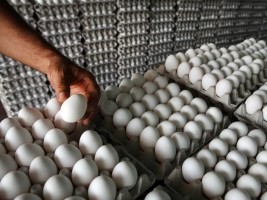
In Haiti from 2010 to 2015, intensive egg production has increased fivefold, from 50,000 to 250,000 layers or approximately 1 million to over 6 million eggs per month. Haitian Production offers a very advantageous quality products, producers arriving to compete imported eggs that are in most cases the result of dumping and smuggling.
A study (2015) commissioned by the Haitian Government, shows that the country under the leadership of the Ministry of Agriculture, can continue this expansion of production for the benefit of the population on condition of solving certain constraints.
In addition, to raise all these constraints it is necessary that agro-entrepreneurs of the sector benefiting from technical and financial advice. These constraints will be better resolved if all partners in the sector manage to coordinate their actions.
It is possible to envisage a substantial increase in egg production to reach 80% of self-supply of the domestic market.
|
Tuesday, December 22, 2015
Haiti postpones scheduled presidential runoff
AP
6:49 p.m. EST December 21, 2015
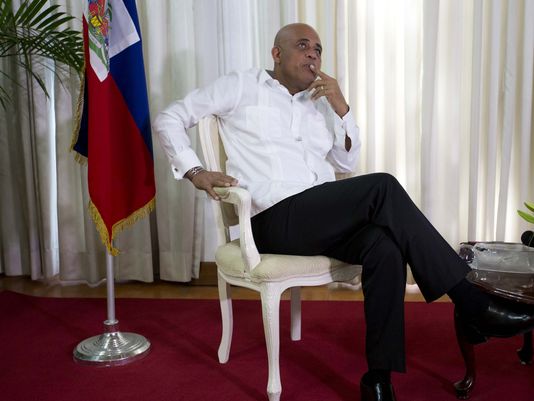
PORT-AU-PRINCE, Haiti (AP) - Haitian electoral authorities have postponed presidential and legislative runoffs set for this weekend.
In a brief statement issued Monday evening, Haiti's Provisional Electoral Council said the vote scheduled for Dec. 27 has been postponed until a special commission can make its recommendations.
In recent days, President Michel Martelly announced that a five-member commission would assess Haiti's electoral process ahead of the runoffs that opposition factions have threatened to derail because of suspicions of widespread fraud.
Council spokesman Roudy Stanley Penn says a new election date should be announced soon.
For weeks, an opposition alliance has demanded an independent review of late October elections that it insists were rigged in favor of the government-backed presidential candidate.
The commission has been rejected by the opposition. Its members have not yet met.
|
Thursday, December 10, 2015
Tuesday, December 1, 2015
Support the BDE
Haiti.Today.Tomorrow supports/promotes the Bureau of Education (BDE) in Hinche, as it serves as an integral component of the Haitian infrastructure. We encourage your support as well, Steve
 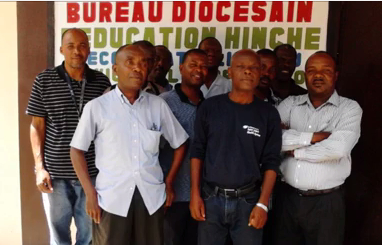
Spend 2 minutes/38 seconds watching the BDE's #Giving Tuesday message about how they are Giving Hope through Education and how to support the BDE on this #Giving Tuesday.
Why Support the BDE?
The BDE leadership team and supervisors assist school principals and pastors in the operations of the primary and secondary schools throughout the Diocese providing administrative support as well as assistance with hiring and training teachers.
Richard and Msgr. Jethro also assist the pastors and principals with conflict resolution when problems arise with teacher contracts or other concerns with a schools operation.
Many of the schools in the Diocese of Hinche have very limited resources and are unable to purchase supplies and textbooks for students to use. In these cases the Bureau of Education works with other partners to find funding to provide basic materials to these schools ensuring every child has a chance to learn and improve their future through education.
In addition to the administrative support for the schools, the supervisors and staff provide teacher training and support for the formation of student government programs, parent teacher organizations and community leadership groups through the Program Educative Catholic, PECH.
The goals of the PECH program are to create Christian leaders for a new society by providing leadership skills and experience to students in both primary and secondary school so that they are prepared to become the future leaders of their communities with a focus on Christian values, protecting the environment and working for the common good.
The four supervisors visit all schools in the Diocese providing training and support for teachers to improve the quality of education in all schools.
During visits supervisors observe teachers during class completing a report detailing the teacher's skills and abilities and sit down with the teachers and principals to discuss the observations and any suggestions for improvements. The supervisors also provide specific training to individual schools or teachers at the request of the principal or pastor in subjects the teachers lacks the required knowledge or skills to teach.
The Bureau of Education in Hinche is a great example of Haitian Leadership that is doing great work to support the needs of the local community.
The Bureau of Education in Hinche is recognized as one of the best in the country by the Bishops Commission on Catholic Education, representatives of CRS in Haiti and members of Notre Dame's Alliance for Catholic Education in Haiti. The strength of the staff and the quality of the work they are able to complete is providing opportunities for funding of large scale teacher training and other projects to improve the quality of education from major foundations like the Kellogg Foundation.
One committed team from the Bureau of Education in Hinche is proving just that with each passing year. Each year:
|
Wednesday, November 11, 2015
Christmas Again!
|

Thursday, November 5, 2015

Tuesday, October 27, 2015
Buy Just Haiti Coffee!
It's much more than a cup of coffee.

It's a Just Haiti cup of coffee.
|


Monday, October 26, 2015
Monday, October 19, 2015
Cultural Differences?

Since
becoming involved with Haiti, the number of times I've heard the term
"cultural" have been more than numerous, especially the phrase cultural
differences.
While, yes, cultural differences certainly exist, need to be accounted for, but is it possible that an over-sensitivity or misinterpretation of culture could lead to problems in spite of its self?
Could, possibly, cultural awareness be trumping the larger common denominator; humanity? Do human being characteristics cross culture lines?
While, yes, cultural differences certainly exist, need to be accounted for, but is it possible that an over-sensitivity or misinterpretation of culture could lead to problems in spite of its self?
Could, possibly, cultural awareness be trumping the larger common denominator; humanity? Do human being characteristics cross culture lines?
"Babies"
is a documentary which shows the contrasts of four cultures without
using any form of narration, leaving it to the viewers to take from the
film what they want.
Thus, it is what the viewer brings to this documentary, which ultimately determines how beneficial it will be to the particular viewer. The cultural differences are obvious in this documentary, but as the viewer, can you see the cultural similarities as well? Are there any human similarities, which cross these four cultures?
While watching this documentary, can you listen to yourself as you watch? If you can find time in your busy existence, watch this documentary with an open heart and, maybe, ultimately it will serve to enhance your relationships and experiences in Haiti?
Only you can answer these questions for yourself.
Thus, it is what the viewer brings to this documentary, which ultimately determines how beneficial it will be to the particular viewer. The cultural differences are obvious in this documentary, but as the viewer, can you see the cultural similarities as well? Are there any human similarities, which cross these four cultures?
While watching this documentary, can you listen to yourself as you watch? If you can find time in your busy existence, watch this documentary with an open heart and, maybe, ultimately it will serve to enhance your relationships and experiences in Haiti?
Only you can answer these questions for yourself.
Wednesday, October 14, 2015
Haiti Voters Grapple With Packed Field for Presidency
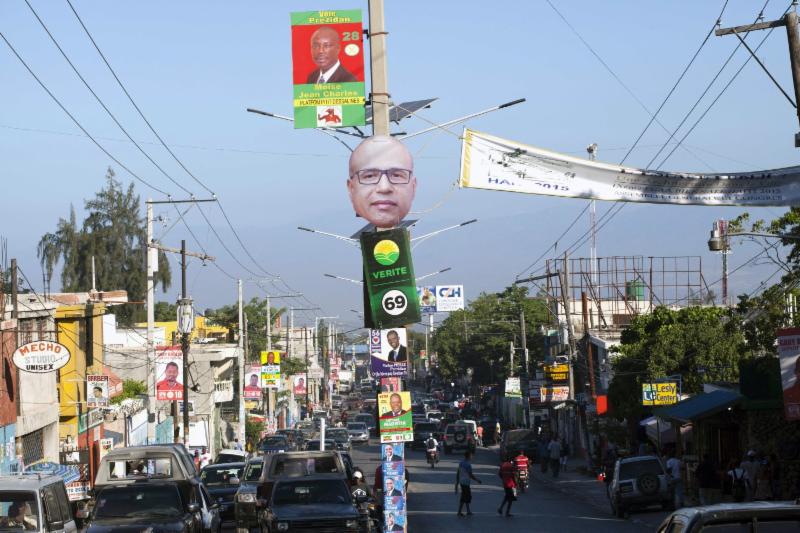
Cities and towns across Haiti are plastered with colorful campaign ads, leaving voters struggling to differentiate a swarm of candidates who grin from posters, banners and billboards slapped on nearly everything that doesn't move and a few that do.
Practically every public office is up for grabs in this year's unprecedented three-round balloting that is picking the next president, two-thirds of the Senate, the entire 119-member Chamber of Deputies and all local offices. Even by Haiti's rough-and-tumble standards, the parade of office-seekers and unpredictability of the elections is dizzying for many.
"There are so many candidates it's impossible to focus on it all and see if a few might actually have good ideas. Right now, this whole thing really gives me a headache," secretary Germithe Merzilus said with an exasperated sigh as a group of partisans walked by in matching T-shirts touting a campaign.
This troubled, poor Caribbean nation has at times been described as nearly ungovernable, yet a lot of people are lining up to try. The first round of Haiti's presidential vote on Oct. 25 features no less than 54 candidates - a fractured field that makes the 19 contenders in the election five years ago look almost reasonable.
They are seeking to succeed President Michel Martelly, who is barred by the constitution from serving a consecutive term.
The apparent front-runner is Jude Celestin, a former state construction chief who was the government-backed presidential candidate in 2010. Disputed preliminary results then showed Celestin edging out Martelly for a spot in the runoff ballot, but under international pressure Haiti's electoral authorities reviewed the count and eliminated him from the race.
Other major candidates include an ex-senator who has been Martelly's most vocal critic, a Port-au-Prince lawyer and public notary, a former police chief, and the leader of the political movement founded by former President Jean-Bertrand Aristide, a once dominant but increasingly divided party that was barred from the last election.
Spoiler candidates could include an influential sitting senator and a businessman who has made a Haitian fortune building a chain of "borlettes," gaudily painted outlets that play on New York State Lottery numbers.
With so many candidates, no one is likely to get more than 50 percent of the vote Oct. 25, meaning the two leading vote getters will face each other in a runoff Dec. 27.
The jam-packed presidential field is just a small share of the horde of Haitian politicians holding rallies to whip up enthusiasm, sometimes with traditional bands of drums, horns and leather tambourines.
Because elections were postponed amid political gridlock during Martelly's nearly five-year tenure, this month's first-round presidential contest is taking place on the same day as legislative runoff elections arising from a messy vote in August that featured more than 1,500 candidates and nearly 130 parties.
Officials will also hold re-do elections in 25 districts where violence, ballot stuffing and voter intimidation plagued voting two months ago. The almost certain presidential runoff Dec. 27 will also see more legislative contests as well as voting for all local offices.
Vijonet Demero, secretary-general of Haiti's frequently criticized Provisional Electoral Council, predicts the Oct. 25 voting will be far better organized than the initial parliamentary round two months ago, the results of which were only recently issued.
"We have learned from the mistakes of August 9th and we've been busy making all the necessary administrative changes," Demero said at the well-guarded headquarters of the council overseeing the $69 million election process, with more than $30 million provided by the U.S.
A major change, he said, will be greatly limiting the number of political party representatives allowed to observe at polling stations in a bid to avoid voter intimidation.
Political analyst Fritz Dorvilier, a sociologist at the State University of Haiti, is skeptical.
Dorvilier says the council has displayed "incompetent management" from the start and gives some observers the impression it has a hidden agenda, a frequent charge against Haitian electoral officials. Last week, one of the council's nine members abruptly resigned, citing a lack of conviction in the process.
Haitian balloting is never easy and in some districts election day is more like a convulsion. Democracy is still relatively new in Haiti, which for most of its history has endured coups and civilian and military dictatorships. The country only saw its first freely elected leader with Aristide in 1990, and he was ousted by a military coup just eight months later and was driven from his second term by a rebellion.
The past decade has been relatively stable politically, with two presidents chosen by election. However, ballot stuffing, violence and fraud allegations continue. In a recent report, the World Bank said violent incidents in Haiti are "clustered around political events such as elections and transitions" and stability remains fragile.
Many analysts have serious concerns about disorder during the upcoming presidential vote, which is expected to have a far higher voter turnout than the 18 percent seen for the August parliamentary voting.
"In Haiti, foreboding is a permanent state of mind when it comes to elections," said Mark Schneider of the International Crisis Group in Washington.
Still, Schneider and other analysts say these elections are critical for Haiti to advance as it continues an uneven recovery from the 2010 earthquake that devastated Port-au-Prince and surrounding areas.
Haiti remains a very poor country and voters have no shortage of worries. The cost of living keeps going up while decent jobs remain scarce. The majority of Haitians live without electricity or sanitation and more than 6 million out of 10.4 million inhabitants have incomes under the national poverty line of $2.44 a day.
The candidates all say their main focus is bringing opportunities to more citizens, but Haitian politicians have been saying that for a long time.
"I want to see Haiti get better faster," Merzilus, the secretary, said while standing next to a sheet-metal fence plastered with posters for a half dozen candidates. "If the next president can deliver that, I think everyone will support them."
Subscribe to:
Posts (Atom)